Simple Ways to Spot Problems and Handle Them the Right Way
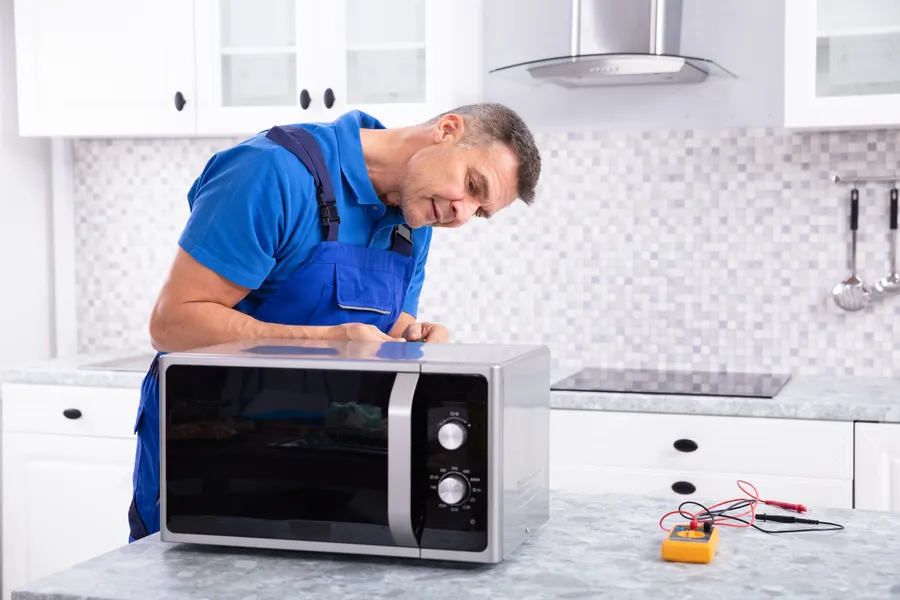
If your microwave is not heating, making strange noises, or turning off by itself, you can often spot the problem with a quick check. Many common microwave issues have simple causes like a bad door switch, a blown fuse, or a dirty interior. Some fixes are safe to handle at home, while others require professional microwave repair to avoid injury. Knowing the difference helps you stay safe and avoid bigger damage.
Quick Diagnosis Summary
Most microwave problems fall into a few main groups. The unit may have power but not heat. It may not turn on at all. It may spark inside. Or it may make loud buzzing sounds. Each symptom points to a different part inside the appliance. Start by matching what you see or hear with the likely cause. Then decide if it is safe to check further.
Common Symptoms
- Microwave runs but food stays cold
- Display light is off and unit will not start
- Sparks or flashing inside the cavity
- Loud humming or buzzing noise
- Turntable not spinning
- Door will not close or latch
These signs help narrow down what might be wrong. For example, no heat often points to a failed magnetron. A unit that is completely dead may have a blown internal fuse or power issue.
Likely Causes
If your microwave runs but does not heat, the magnetron, diode, or capacitor may be faulty. These parts create the heat inside the appliance. They hold high voltage, even when unplugged. That makes them dangerous to handle.
If the microwave will not turn on at all, check the outlet first. A tripped breaker or loose plug is common. If power is fine, the internal fuse or door switch could be the issue.
Sparks inside often come from metal left in the microwave. It can also mean the waveguide cover is damaged. Grease buildup can also cause arcing.
A noisy microwave may have a worn turntable motor or a failing high-voltage part. Some noises are normal. Loud or new sounds are not.
What to Check First
Always start with simple and safe steps before thinking about microwave repair.
- Unplug the microwave.
- Check the outlet with another small appliance.
- Inspect the power cord for damage.
- Open the door and check the latch for dirt or cracks.
- Look inside for food buildup or burned spots.
- Remove and clean the turntable and roller ring.
Cleaning solves many small problems. Food splatter can block sensors or cause sparks. A dirty door seal can stop the unit from running.
Safe Fixes Vs Pro-Level Fixes
Some tasks are safe for homeowners. Others should only be handled by trained technicians.
Safe to handle:
- Cleaning the interior
- Replacing the glass turntable
- Checking and resetting the breaker
- Testing the outlet
Call for professional microwave repair:
- Replacing internal fuses
- Fixing a bad magnetron
- Repairing high-voltage components
- Solving repeated sparking issues
Microwaves store electricity even after they are unplugged. Touching the wrong part can cause serious injury. That is why internal part replacement is not a DIY job.
Prevention Tips
Regular care can reduce the need for appliance repair and extend the life of your microwave.
- Wipe down the interior after heavy use
- Cover food to prevent splatter
- Never run the microwave empty
- Avoid using metal or foil inside
- Check the door seal for cracks
Running the microwave empty can damage the magnetron quickly. Using metal can cause sparks and interior damage. Small habits can prevent costly microwave repair later.
Final Recommendation
If your microwave shows small issues like dirt buildup or a loose plug, you can often fix it safely at home. If the unit will not heat, keeps blowing fuses, or makes loud electrical noises, it is time for expert help. In Floresville, TX, fast and safe service makes a big difference when dealing with electrical appliances. At Jehu Appliance Repair Service - Floresville, we handle microwave repair with trained technicians and proper tools. Call us at (830) 239-9314 to schedule service and let us fix the problem safely and correctly.